The Complete Guide to Solar-Powered Air Conditioners

Cooling your place costs way more these days – especially when summer heat regularly hits 35–45°C. Many homeowners now start by LESCO bill online check to understand how much cooling is costing them before exploring solar AC options. Meanwhile, solar panels are getting cheaper and more efficient every year. That’s why solar-powered air conditioners have become one of the fastest-growing trends in renewable energy.
If you’re looking to lower power costs, chill a remote cabin, or just go greener with cooling, this walkthrough covers everything you need. No matter the motive, here’s the guide on how solar ACs work, how to size your panels, what they’ll cost, which models are worth checking out, and whether you’ll actually save money in the long run.
What is a Solar-Powered Air Conditioner?
A solar-powered air conditioner is an AC unit powered by electricity generated by solar panels. It uses sunlight as its primary power source, reducing or eliminating the need for grid power.
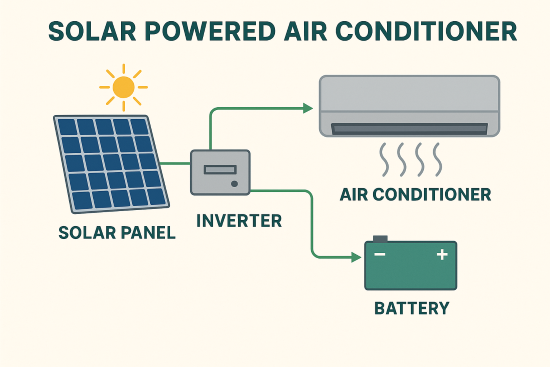
How the energy flow work?
- Solar panels convert sunlight into DC electricity.
- Electricity is sent to a DC compressor (in DC solar ACs), or an inverter, which converts DC to AC (in hybrid/on-grid solar ACs).
- The AC uses this energy to cool your room.
- Any shortage is supplied by grid power or batteries (depending on the setup).
- Any excess solar energy may be used to charge batteries or fed back to the grid.
In simple terms:
Sunlight → Solar Panels → Inverter/DC Input → Air Conditioner → Cooling
Solar ACs have improved so much – these days, a typical 1-ton or 1.5-ton model runs on just a small set of panels.
Types of Solar Air Conditioning Systems
Solar air conditioners are available in different setups – each one fits certain houses, budgets, or cooling demands better than others – but choices depend on specific situations. Some work well in large spaces while others save more energy, yet performance varies with setup and climate conditions.
1. DC Solar Air Conditioners (Off-Grid / Direct Solar)
These units run directly on the DC power from your solar panels.
| Pros | Cons |
| Very energy-efficient | Needs batteries for nighttime use |
| Ideal for remote or off-grid areas | Requires stable sunlight for maximum performance |
| Minimum conversion losses (no AC/DC inverter step) | Higher initial costs than hybrids |
| Lower operating cost |
Best for: Off-grid homes, cabins, farms, RV/tiny homes, remote buildings.
2. Hybrid Solar AC (PV + Grid + Inverter)
This is the most common and practical solution for residents. A hybrid AC automatically switches between solar and grid power. On sunny days, it runs on solar energy first. When solar output drops (even partially), grid power steps in to fill the gap.
Pros
- 24/7 operation
- Works like a standard AC at night
- Great for urban/suburban homes
- Lower initial investment compared to complete off-grid solutions
Cons
- Requires an inverter
- Still consumes some grid power at night unless you add batteries
Best for: Most households looking to reduce electricity bills significantly.
3. Solar Thermal / Absorption Cooling
These units use solar heat—not electricity—to drive the cooling process. They’re less common, more expensive, and typically used in industrial settings.
Best for: Large-scale or commercial applications, not typical homeowners.
4. Portable & RV Solar Air Conditioners
These compact models work with:
- Portable solar panels
- Power stations (Jackery, EcoFlow, Bluetti, etc.)
- 12V DC batteries
They’re ideal for campers, van-life, and small off-grid rooms.
Best for: Camping, RVs, tiny homes, mobile cooling.
How Much Solar Power Do You Need to Run an AC?
Pakistan receives 5–7 peak sunlight hours daily, ideal for solar AC.
Solar Panel Requirement by AC Size
| AC Size | Solar Panels Needed | System Size | Battery Needed |
| 1 Ton Inverter | 4-6 panels | 1.5-2 kW | Optional |
| 1.5 Ton Inverter | 6-10 panel | 2.5-3.5 kW | Optional |
| 2 Ton Inverter | 10-14 panels | 4-5 kW | Optional |
These numbers vary by:
- Panel wattage (450–650W standard in Pakistan)
- Hours of AC use
- Region (Sindh & South Punjab get the strongest sunlight)
Cost of Solar-Powered Air Conditioner in Pakistan
Solar AC Price (Standalone)
| AC Type | Price Range (PKR) |
| 1 Ton Hybrid Solar AC | Rs. 160,000-220,000 |
| 1.5 Ton Hybrid Solar AC | Rs. 200,000-290,000 |
| 2 Ton Hybrid Solar AC | Rs. 260,000-380,000 |
Cost of Solar System for AC
| System Size | Price (On-Grid) | Price (Hybrid w/ Batteries) |
| 2 kW | Rs. 300,000-400,000 | Rs. 550,000-750,000 |
| 3 kW | Rs. 450,000-600,000 | Rs. 800,000-1,000,000 |
| 4–5 kW | Rs. 650,000-850,000 | Rs. 1,200,000-1,600,000 |
Note: Your final cost can vary depending on the Solar Panel Price, the brand of panels (Longi, Canadian, Jinko), the type of inverter used, and the quality of installation.
How Much Electricity Can You Save?
A 1.5-ton inverter AC typically consumes 1.2–1.8 units per hour. By running it on solar power, you can achieve significant energy savings:
- Up to 80–100% reduction in electricity usage
- Monthly WAPDA bill savings of Rs. 10,000 – 25,000
For more tips on lowering your electricity costs and maximizing savings, check out ways to reduce your LESCO electricity bill.
Payback Period
Most Pakistani households recover the full cost within:
- 2.5 to 4 years (with net metering)
- 3 to 5 years (with a hybrid battery system)
Best Solar AC Brands Commonly Found in Pakistan
Here are brands known for good performance and availability:
- Haier Solar Hybrid Series
- Gree Solar AC
- Kenwood Inverter + Solar Setup
- Inverex Solar AC
- Orient Ultron Solar Ready AC
Most standard inverter ACs can run on solar using:
- A hybrid inverter
- Appropriate solar panel system
Sometimes, this provides better value than buying a dedicated “solar AC”.
Installation Guide: What You Need to Know
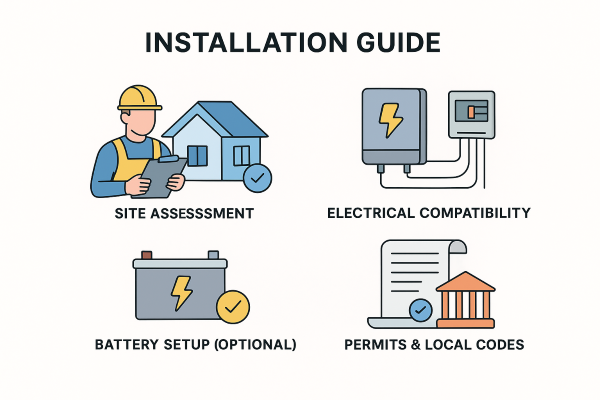
Setting up a solar air conditioner means planning the whole setup so it works well without issues. Before you begin, look at which way your roof faces, how much shade there is, where panels should go, and whether the inverter matches.
A licensed installer will also review power demand, wire thickness, circuit safety, plus storage needs when backup matters.
Proper setup boosts efficiency while extending the lifespan of your cooling unit and panels.
Solar Air Conditioner Pros & Cons
Advantages
- Lower electricity bills
- Great for off-grid use
- Eco-friendly
- Works in high-heat regions when needed most
Disadvantages
- Higher upfront cost
- Requires proper panel sizing
- Night use needs batteries
- May require a hybrid configuration in cloudy climates
FAQs
1. Do solar-powered air conditioners require special maintenance compared to regular ACs?
Solar ACs do not require special internal maintenance, but the external solar components benefit from periodic care. Try cleaning the panels every few weeks. Also, check the wires, breakers, and the inverter’s performance every few months. This keeps things running well.
2. Are portable solar air conditioners effective for small rooms or camping?
Yes. They can cool down smaller rooms, RVs, or tents if you hook them up with the right power station or foldable solar panels. Just keep in mind they’re made for cooling a single area, not the whole house.
3. Can I monitor a solar powered air conditioner’s performance on a mobile app?
Yes. Many hybrid and smart inverters have apps that let you track solar production, AC energy use, battery level, and savings in real time.
Final Thoughts: Is a Solar Powered AC Worth it?
A solar-powered air conditioner could be a smart move for homes across Pakistan. As heat climbs and power rates go up, these units use steady sunshine to cut costs while keeping rooms cool – especially when outages hit.