Solar Power Scheme in Pakistan: LESCO Net-Metering Guide 2026

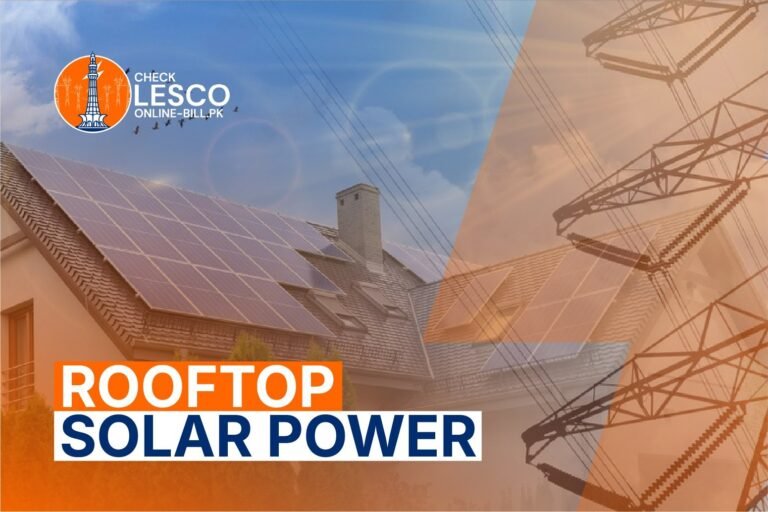
Electricity prices in Pakistan have spiked in recent years, making monthly bills difficult for many households. As a result, rooftop solar systems are adopted by thousands of homes, installing small to medium-sized setups to cut their electricity bills and stabilize long-term costs. The solar power scheme is also initiated to help people generate their own electricity for free.
Consumers across Pakistan are shifting to solar power due to high electricity tariffs, falling solar equipment prices, net metering benefits, attractive payback periods, and greater control and energy independence.
This guide explains what a solar power scheme is, the LESCO solar net-metering process, the government solar programs available, and some common mistakes to avoid before signing a contract.
What is a “Solar Power Scheme”?
A solar power scheme is a governmental or private project that subsidizes, finances, or installs solar panels at no cost to encourage the use of solar energy.
All these programs are designed to reduce electricity bills, decrease dependence on fossil fuels, and enhance the energy independence of households and businesses.
Understanding Net-Metering in Pakistan
Net-metering means that when you install a rooftop solar system and connect it to the grid legally, then the excess amount of electricity generated is sent to the grid, which gives you credit on your monthly electricity bill by reducing it.
Is Net-Metering Available for LESCO Customers?
Yes, LESCO officially supports net metering for residential and commercial customers.
LESCO Net-Metering Requirements
The following are some requirements for net metering:
- A valid LESCO electricity connection
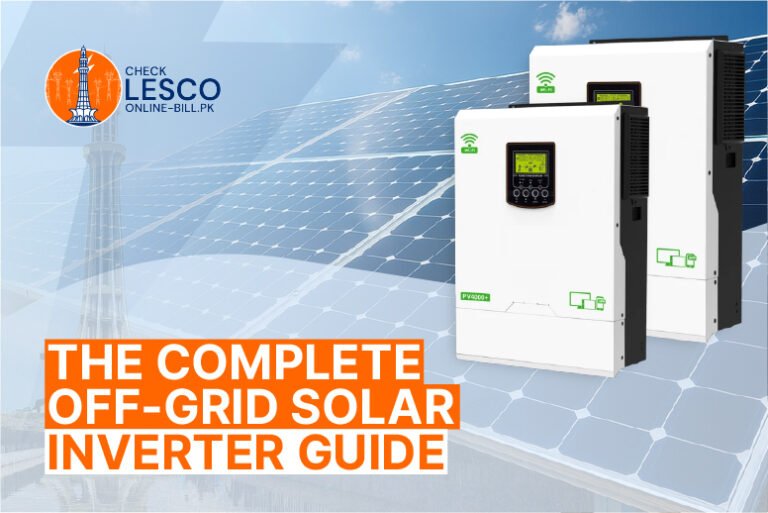
- A certified on-grid or hybrid inverter
- Solar panels with proper mounting
- Installation by an AEDB/ARE-certified installer
- Net-metering application submitted through your installer
- LESCO inspection + approval
- Installation of a bi-directional (green) meter
Typical Timeline: 2–8 weeks (depending on documentation, inspections, and meter availability).
How Much Does a Home Solar System Cost in Pakistan?
Actual solar system costs vary by brand, installer, and inverter type, influenced by inverter selection, installation quality, and current solar panel price.
| Solar System Size | Estimated Costs | Suitable for |
| 3 kW | PKR 400,000 – 600,000 | Small apartments or low-usage homes |
| 5 kW | PKR 700,000 – 1,100,000 | Average-sized homes |
| 7 kW | PKR 1 – 1.2 million | Larger homes or AC users |
| 10 kW | PKR 1.4 – 1.8 million | High usage homes |
Per-Watt Cost:
- On-grid systems: PKR 95–150/watt
- Hybrid systems: PKR 150–200/watt
How Much Can LESCO Users Save?
A 5 kW system can potentially reduce an average-sized home’s LESCO bill by 80–100%, depending on actual consumption, daytime usage, system orientation, net-metering credits, and seasonal changes in sunlight.
How to Apply for Net-Metering with LESCO? (Step-by-Step Process)
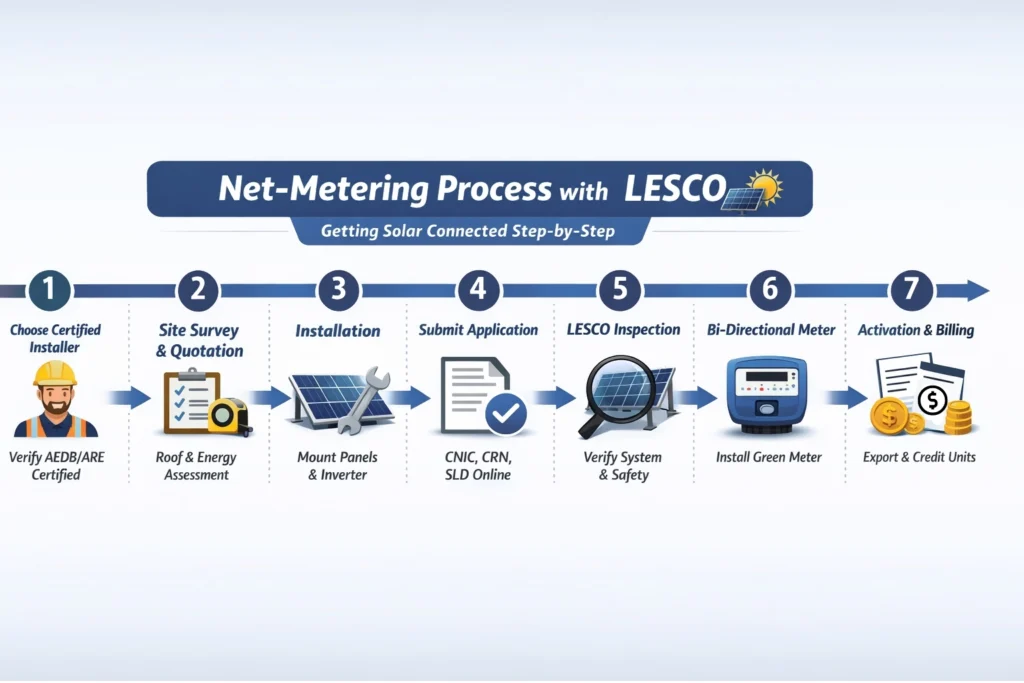
Step 1: Choose a Certified Installer
LESCO accepts applications only from AEDB/ARE-certified solar installers.
Selection tips:
- Check installer certification on the AEDB/ARE portal.
- Review previous installations and customer feedback.
- Ensure they provide complete documentation, warranty, and maintenance service.
Step 2: System Design & Quotation
The installer conducts a site survey to:
- Measure roof space and orientation.
- Conduct shade analysis.
- Estimate energy consumption and expected solar generation.
You will receive a quotation including:
- Number of panels
- Inverter type (on-grid or hybrid)
- Mounting structure
- Total system cost
- Expected bill reduction and payback period
Step 3: Installation of Solar System
Installer responsibilities:
- Mount panels on the rooftop.
- Connect the wiring and the inverter.
- Install safety breakers and earthing.
- Conduct initial testing.
Important: Do not sign off until installation is completed per standards.
Step 4: Prepare & Submit Net-Metering Application
Required Documents
- Copy of CNIC (owner/consumer)
- Latest electricity bill from LESCO
- Consumer Reference Number (CRN)
- Single-Line Diagram (SLD) of the system
- Panel and inverter specifications
- Installer certification & proof
- Layout and roof/site details
The installer usually applies online through LESCO’s net-metering portal.
Step 5: LESCO Technical Inspection
LESCO team visits the site to verify:
- Installation quality and compliance with standards
- Correct inverter setup
- Proper earthing and safety measures
- Overall compatibility with the LESCO grid
Tip: Be available during the inspection and provide any additional documents requested.
Step 6: Installation of Bi-Directional (Green) Meter
Once LESCO approves, they install a green meter (bi-directional meter).
Function:
- Measures electricity drawn from the grid (imports)
- Measures excess electricity exported to the grid (exports)
This meter allows you to receive credit for exported units on your monthly bill.
Step 7: Activation & First Billing Cycle
After meter installation and system activation:
- The system begins exporting units to the grid.
- Your next LESCO bill will reflect net-metering credits, reducing your payable amount.
Typically, the entire process takes 2–8 weeks, depending on:
- Documentation completeness
- Installer efficiency
- LESCO inspection schedule
- Meter availability
Subsidies & Programs to Watch in 2026
The landscape of solar power schemes is constantly changing. While permanent nationwide subsidies are not always in effect, some provincial and federal initiatives emerge over time. Some of these include:
1. Punjab Solar Power Scheme
The Chief Minister’s Punjab Solar Power Scheme provides free solar systems to low-income households in Punjab who consume 0–200 electricity units per month.
Eligibility Criteria:
- Applicant must be a resident of Punjab
- Monthly electricity consumption must be between 0 and 200 units
- Households should fall under the low-income category
- Valid CNIC and electricity reference number are required
Registration can be completed using the following methods:
- Online Registration: Visit the official web portal of the Chief Minister Punjab Free Solar Panel Scheme.
- SMS Registration: Send your Reference Number, followed by a space and your CNIC, to 8800
2. PM Green Initiative
- This scheme targets ordinary citizens who genuinely need financial help to adopt solar power.
- You can review the eligibility criteria or apply online on the official website
NGO / Donor-Supported Solar Programs
Rural areas sometimes benefit from support by:
- NGOs
- International development agencies
- Off-grid solar initiatives
These donor-supported solar programs are location-specific.
Buyback Rate & Policy Impact on Payback
The rate at which the utility pays or credits you for generating electricity and feeding it into the grid is the buyback rate.
Why Does it Matter?
It matters because it determines how much money you get back for excess electricity you sell to the grid, directly impacting the payback period of your solar system.
- A higher buyback rate leads to a faster payback time.
- A lower buyback rate results in a slower payback period.
Should Homeowners Worry About Policy Changes?
The policy updates usually affect:
- Export rates
- Grid stability rules
- Qualification criteria
However, solar remains a long-term investment, and even with policy shifts, self-consumption continues to deliver significant savings.
Pros, Cons, and Technical Risks of Installing Solar
Consider the following advantages, disadvantages, and technical risks of installing solar.
| Pros | Cons | Technical Risks |
| Reduction in monthly bills | High initial cost | Voltage issues |
| Long-term cost stability | Reliance on sunlight | Wrong inverter sizing |
| Eco-friendly energy | Weather-dependent | A weak roof may need reinforcement |
| Property value increases | Poor installation | |
| Reliable daytime power | Warranty misunderstandings |
Panel, Inverter & Warranty Tips
Panel Selection
- Prefer Tier-1 brands
- Check efficiency rating
- Look for a 25-year performance warranty.
Inverter Selection
- On-grid: for maximum net-metering export
- Hybrid: supports limited backup with batteries
- Batteries: optional (but helpful for load-shedding)
Warranties to Demand
- Panel: 10–12 years product + 25-year performance
- Inverter: 3–5 years
- Installation: 1 year workmanship
Mistakes to Avoid Before Signing a Solar Contract
Some common mistakes you should avoid before signing a solar contract are:
- Choosing a non-certified installer
- Selecting an inverter too small for future upgrades
- Not confirming net-metering eligibility
- Forgetting annual cleaning/maintenance requirements
- Accepting verbal warranty instead of written documents
- Not checking the exact meter charges
- Overlooking your roof’s condition
FAQs
Are there free solar schemes in Pakistan?
Some provincial programs, such as the CM solar power scheme, appear from time to time. But there is no permanent nationwide free solar scheme. Always verify current availability from official announcements.
Will policy changes affect my solar decision?
Policy changes may adjust buyback rates, but self-consumption savings remain strong, making solar beneficial in the long run.
Do I need batteries for solar?
Batteries are optional and used as a backup during load shedding.
How long does LESCO take to approve a net-metering application?
LESCO usually approves the net-metering application within 30-60 days. It may vary depending on the completeness of your documents, LESCO’s processing speed, and the availability of new meters.
Where can I check official net-metering rules?
You can check the net metering rules by visiting:
- The official NEPRA website
- NEPRA net metering notification
- The official LESCO website for net metering regulations and the application form.
Conclusion
Investing in rooftop solar under Pakistan’s solar power scheme framework is a smart long-term financial decision. Benefits include:
- Predictable electricity costs
- Significant monthly savings
- Long-term ROI
- Greater control over power consumption
Next Steps:
- Choose a licensed AEDB/ARE installer
- Check your energy usage & costs
- Understand net-metering fully
With proper planning, you can enjoy lower bills, energy independence, and long-term peace of mind.