Rooftop Solar Power Explained: What to Know Before Going Solar in 2026

Rooftop solar power lets regular households or companies make their own green electricity without hassle. With electric rates going up while panel costs go down, people now pick rooftop setups not just to save cash each month but also to rely less on old-grid energy than ever before.
If you’re thinking about solar on your roof, here’s what matters: panels grab sunlight to make electricity, prices change based on size and type, your energy use sets how many panels you’ll need, rebates and solar schemes can lower costs, setup takes planning and permits, maintenance is usually light, and it could save money over time. Once you’ve gone through this guide, things like savings and whether it’s a good fit for your house or business will feel much clearer.
What Is Rooftop Solar Power?
Rooftop solar power means generating electrical energy using panels mounted on the roofs of houses, offices, or large buildings. When the sun hits the panels, they produce electricity that runs lights, fridges, or other devices. This reduces the amount of power you pull from the main supply. Some setups send extra energy back to the network, earning credits under special billing rules such as net metering.
How Solar Systems Generate Electricity?
Inside every rooftop solar system are PV cells made of semiconductor stuff. When sunlight hits these bits, electrons move around, creating DC power through this reaction.
Since houses use AC power, the energy flows through a device called an inverter, changing it from DC to AC. That updated electric flow powers your gadgets and tools around the home.
Key components of a rooftop solar system
A standard roof-based solar system contains:
- Solar panels capture sunlight and generate electricity.
- Inverter that converts DC to AC power.
- Mounting structures support panels at a secure angle.
- Cables and connectors transfer electricity safely.
- Optional solar batteries that store excess power for use at night or during outages.
- Monitoring system that tracks real-time production and performance.
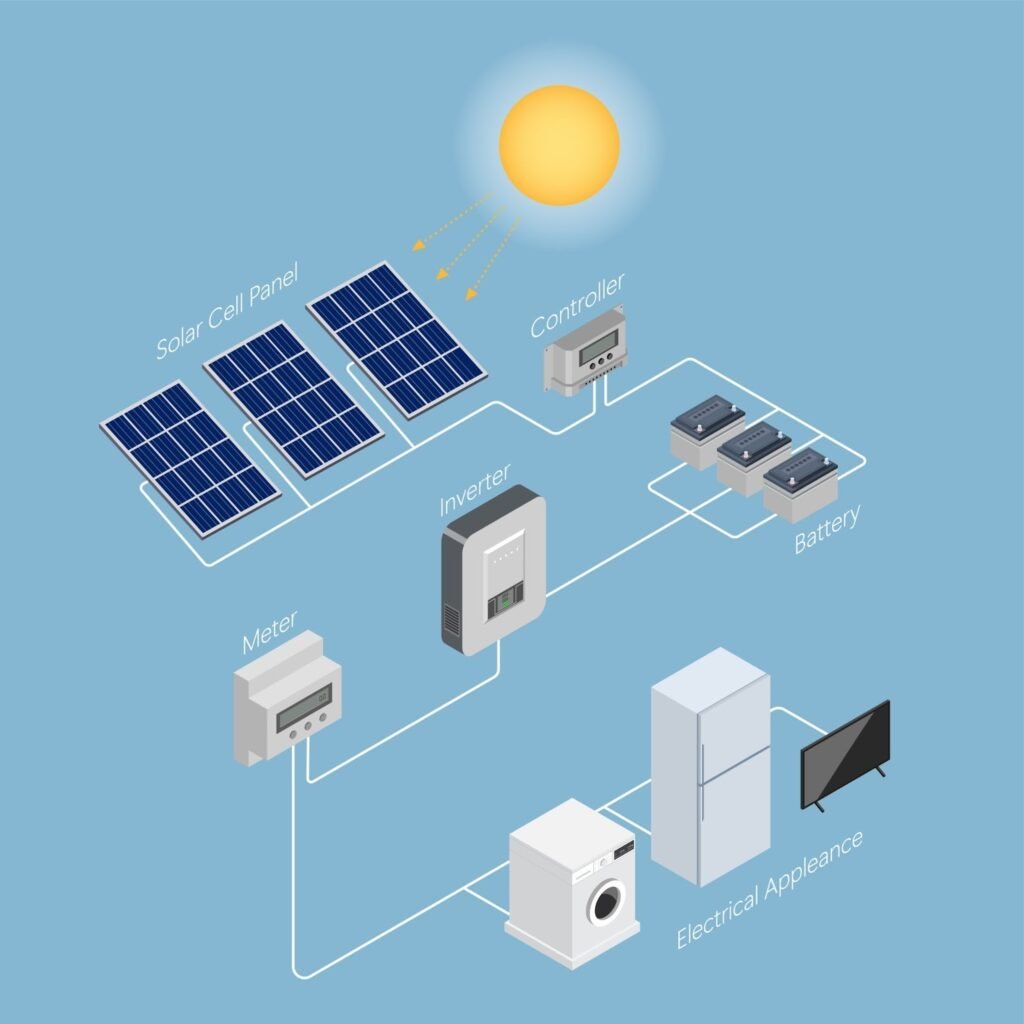
Together, these components form a complete renewable energy solution right on your roof.
Types of Rooftop Solar Systems
| Type | Description | Best for | Cost | Backup during Outage |
| On-Grid Solar | Grid-connected; uses net metering | Homes with a reliable grid | Lowest | No |
| Off-Grid Solar | Comes with batteries; no grid connection | Remote areas | High | Yes |
| Hybrid Solar | A combination of a grid and a battery | Home/businesses needing backup | Highest | A combination of a grid and a battery |
Benefits of Rooftop Solar Power
Lower electricity bills
A significant reason why people go for rooftop solar is Lower electric bills. Thanks to net metering, extra power generated during the day balances what you use at night, lowering monthly expenses while often earning credits back. Learn more tips on how to reduce your LESCO electricity bill.
Environmental benefits
Solar power gives clean electricity around. Making energy right above your head means less need for coal or oil, which cuts down on dirty air pollution. A small rooftop setup mightn’t look like much, yet it cuts down on heaps of carbon dioxide over the years.
Energy independence and reliability
Fitting a battery to your roof solar setup means saving power for outages, pricier times, or after dark, so you’re tension-free when supply cuts or bills climb. That backup strength makes it easier to handle shaky grids or steeper rates without stress.
Rising home value
Solar panels can make houses more appealing to buyers, so they sometimes fetch higher prices, since people like saving on power bills later. Prices go up by different amounts depending on where you live, yet going solar usually boosts a home’s worth, kinda like redoing the kitchen or installing a modern heating setup.
How Much Rooftop Solar Power Do You Need?
To figure out how big your rooftop solar setup should be, check your usual monthly power use in kilowatt-hours (kWh). You’ll find that info on your electric bill – this becomes the starting point when planning your system size.
Most houses use 1,000–1,200 kWh per month, so they often choose a 7–10 kW solar setup. However, it really depends on how much power they actually pull each day.
Your real requirements might change based on the weather where you live, which way your roof faces, or how much power you use each day.
Standard Solar system sizes for homes and businesses
- Homeowners usually pick setups like 3 kW or 5 kW, though some go for 7 kW instead. A few even use 10 kW when needed.
- Shops or offices might need 20 kW up to over 100 kW – it depends on how big the building is, and also what machines they run.
Larger commercial structures occasionally rely on systems with hundreds of kilowatts to boost output, which reduces grid dependence while balancing energy needs across busy sites.
Factors that affect system size
Some common factors that affect system size are:
- Available roof space
- Sun exposure and shading
- Panel efficiency
- Future demands, such as electric vehicle charging
- Local weather (sunny climates require fewer panels)
Costs of Installing Rooftop Solar Panels
Solar prices vary widely by country and region, but are often quoted as per-watt costs. This metric includes equipment, labor, and installation.
Residential rooftop systems typically fall within a reasonable range depending on:
- Panel type (standard, premium, or high-efficiency)
- System size
- Whether batteries are included
Commercial solar systems usually have higher upfront costs, but they benefit from economies of scale, making them cost-effective in the long run. Your final price can vary depending on factors such as the solar panel brand (Longi, Canadian, Jinko), the type of inverter, and the quality of installation. To get an accurate idea of current costs, you can see the latest solar panel prices in Pakistan.
What determines the total cost
Several factors influence your total installation cost:
- Solar panel type and efficiency
- Inverter technology (string, microinverter, hybrid)
- Mounting system complexity
- Labor and engineering fees
- Roof condition
- Optional battery storage
- Permits and inspections
Payback period and return on investment (ROI)
The payback period is the time it takes for the system to “pay for itself”. It often ranges from 5 to 10 years, depending on incentives, energy prices, and system size. After this period, the electricity your system produces is essentially free aside from minimal maintenance.
A well-designed rooftop solar system can generate reliable savings for 25 years or more.
Incentives, Rebates, and Tax Benefits
The government offers various incentives that help reduce the cost of rooftop solar systems, making them more affordable for lower-income households. In some areas, these perks are so effective that solar electricity can become cheaper than traditional grid power almost immediately. For a complete overview, check out the solar power schemes in Pakistan to learn about all available rebates, programs, and government-supported initiatives.
Common incentive types include:
- Tax credits
- Direct rebates
- Performance-based incentives (paid per kWh generated)
- Low-interest solar loans
- Utility-specific programs or grants
Note: Incentives change frequently and vary by location, so it’s best to check what’s available in your region before moving forward.
Installation Requirements for Rooftop Solar
1. Roof suitability
Not every roof is ideal for solar. Important factors include:
- Orientation: South-facing roofs get the most sunlight.
- Tilt angle: Optimizes energy generation.
- Shading: Trees, chimneys, or nearby buildings can reduce output.
- Roof condition: If your roof needs replacement soon, it’s wise to repair it before installing panels.
2. Permits and inspections
Installing rooftop solar typically involves:
- A site assessment
- Design and engineering
- Permit submission
- Installation
- Final inspection
- Utility approval for grid connection
While this may seem complicated, reputable installers usually handle the entire permitting process.
3. Choosing a qualified solar installer
Select an installer with:
- Proper certifications
- Strong reviews
- Clear warranties
- Transparent pricing
- Experience with your roof type and system size
Quality installation ensures optimal performance and the system’s long life.
You can also check out the detailed installation guide here
Solar System Maintenance Requirements
Routine cleaning
Solar panels require very little maintenance. Occasional cleaning, usually once or twice a year, is often enough to keep panels performing efficiently. In dusty or polluted environments, more frequent cleaning may be helpful.
Monitoring system health
Most modern systems include online monitoring dashboards that allow you to track:
- Daily energy generation
- Monthly performance trends
- Issues such as inverter faults or decreased output
Monitoring helps ensure your system works as expected.
Typical lifespan of rooftop solar panels
Most solar panels typically last for 25 to 30 years, still generating power beyond their warranty period, although with decreased efficiency. In contrast, inverters usually need to be replaced every ten years.
Is Rooftop Solar Power Worth It?
| When Solar is a Good Investment | When Solar may not be Ideal |
| High electricity rates | The roof is heavily shaded |
| The roof gets strong sunlight | You plan to move soon |
| You qualify for incentives/rebates | The roof needs replacement or repair |
| Electricity is used most during the day | Low electricity consumption |
Note: Even if solar isn’t perfect for your roof, options like ground mounts, partial systems, or community solar may still work.
Future Trends in Rooftop Solar
The rooftop solar market continues to evolve with exciting innovations, including:
- Solar shingles and building-integrated PV, blending seamlessly with roof materials
- Higher-efficiency PV technology, producing more electricity from less area
- Advanced batteries that increase energy independence
- Vehicle-to-home (V2H) integration, allowing electric cars to power your home
- Smart energy management systems that optimize consumption and storage
All these upgrades suggest a world ahead where rooftop solar works better, fits more easily into daily life, or costs less to everyone.
Conclusion
Rooftop solar power cuts costs while being kind to nature – giving you control over how you use energy. Homeowners get smaller bills; businesses boost their green efforts. A solid setup pays off slowly, saving money and reducing harm to the planet at the same time.
Check your roof first – then dig up local deals. Consider various options rather than just one type. Chat with an experienced installer before deciding. A wise choice today means steady power that’s kind on the planet. This move helps us all shift toward cleaner energy down the road.